
About ProJoules
ProJoules helps growers turn crop insights into action with a practical greenhouse management tool built on experience, not assumptions or complexity.
From Experience to Insight
From Experience to Insight
Greenhouse Management tool built
with growers, for growers
ProJoules began with a simple idea: help growers make better decisions with more confidence. Founder Wim van Wingerden, a grower and crop advisor, wanted to support growers in a practical way, even when working remotely. He saw how valuable it could be if growers had access to their own crop data and could plan with more structure and fewer assumptions.
Together with a software company and input from growers in the field, this idea turned into a greenhouse planning tool based on real-world practice. It was never about replacing the grower’s experience, but about making it easier to see patterns, act sooner, and understand the crop better. The first version of the tool was shaped by day-to-day growing, not theory or AI.
Since officially launching in 2022, ProJoules has grown into a company with a committed team. We combine technical knowledge with hands-on cultivation experience, and we keep working closely with growers and advisors. Our goal is to keep the platform practical, clear, and focused on what growers need to plan, adapt, and move forward with confidence.
Our mission
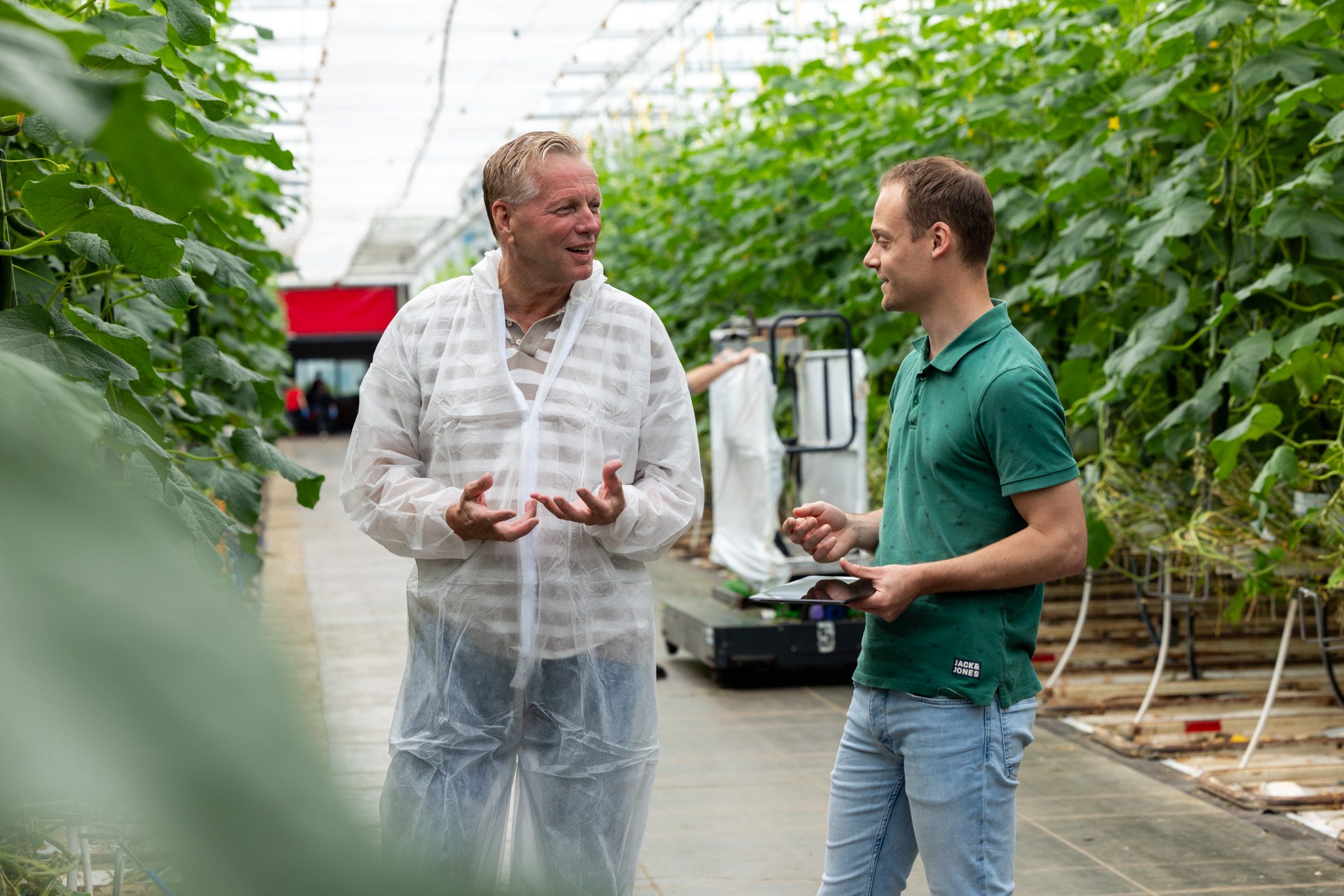
Helping growers take control of their crop planning
Our mission has been the same from the start. We want to give growers tools that support good decision-making. ProJoules adds structure and numbers to what growers already know and feel. With clearer insight, you can act sooner and stay one step ahead in your crop planning.
Looking ahead
Making growers smarter, not the machines
We believe technology should support growers, not take over. That is why ProJoules is built to strengthen your knowledge, not replace it. We also believe that your data belongs to you. We do not use it to train models, and we never will.
Looking forward, we want to keep improving the platform with features that help growers learn more about their own crops. Think personalized plans and smarter insights that help you grow better, without extra hassle.
Frequently Asked Questions
Crop planning in a professional greenhouse usually starts with expected production per m², crop duration, and market demand. Some growers build this in spreadsheets, which works at first but becomes difficult to maintain once the season is running.
In practice, planning works best when it can be continuously updated based on actual crop progress. A structured environment like ProJoules can keep your plan and real production aligned throughout the season.
Greenhouse crop planning is the process of translating your growing strategy into a production timeline. It connects planting dates, crop development, and expected harvest volumes over time.
The real challenge is not creating the plan, but maintaining it. As conditions change, your plan needs to evolve with it. Having everything in one place makes it easier to adjust without starting over.
Planting and harvesting should always be planned together. If they are not linked, it often results in peaks in production followed by gaps.
A more reliable approach is to plan backwards from your desired harvest profile. When planting decisions are directly connected to expected output, it becomes much easier to maintain a consistent production flow.
Accurate forecasting combines historical yield data with current crop development. While experience plays a role, relying on it alone often leads to inconsistent results.
Forecasts become more reliable when they are updated regularly and based on real data. This allows growers to anticipate changes earlier and make better operational and commercial decisions.
Weekly production is typically calculated using expected fruitset, fruitweight and grow period per plant or per m², combined with the number of active plants and their growth stage. For crops like tomato, this usually follows a production curve rather than a fixed output.
In many cases, this is managed in spreadsheets, which makes it difficult to adjust when reality changes. When production is calculated dynamically and updated with real data, it becomes much easier to stay aligned with actual performance.
Yield per m² is influenced by multiple factors, including light levels, temperature, plant density, variety, and crop strategy. Even small changes in these variables can have a significant impact over the full cycle.
Understanding how these factors interact over time is key. When climate data and planning are connected, it becomes easier to identify what is driving performance and where improvements can be made.
In high-tech greenhouses, tomato yield typically ranges between 25 and 100 kg per m² per year, depending on region, variety, and growing strategy.
However, total yield alone does not tell the full story. Production varies throughout the year, often on a weekly basis. That is why many growers focus on understanding production patterns over time instead of only looking at annual totals.
Production planning improves when growers have a clear overview of both current and future output. Without that, decisions are often made too late.
By combining planning with forecasting, it becomes possible to make earlier adjustments and better align labor, sales, and crop strategy. This shift from reactive to proactive planning is where most efficiency gains are made.
Light levels directly influence crop development speed and yield. In high-tech greenhouses, growers often work with daily light sums to better understand these effects.
During periods of lower light, crops develop more slowly and harvest timing shifts. When light data is considered alongside planning and forecasting, it becomes easier to adjust expectations and maintain a more stable production pattern.
Understanding greenhouse cultivation
Research project on light and plant stress
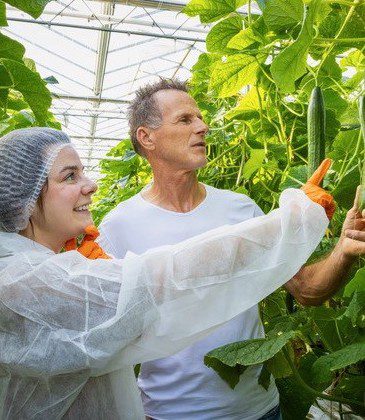
Understanding how light, energy and plant stress interact in the greenhouse is becoming increasingly important for stable and energy efficient cultivation. While many technologies are available, growers still lack integrated, forward looking insight at crop level.
In a new research project, ProJoules works together with Wageningen University and Research and cucumber grower Astengrow to develop model based insights that support more confident cultivation decisions. The study combines field measurements in a commercial greenhouse with predictive models for light use, energy demand and plant stress.
Read more about the research, its focus and partners on the project page.
Book a Free Demo
See how ProJoules makes greenhouse crop planning easier and more accurate for vegetable growers. No commitment, just a clear look at how it works in your greenhouse.